Overview
Microplastics have become almost inescapable in the global environment, appearing everywhere from deep ocean trenches to alpine snow. Their sheer abundance has led to widespread concern that these tiny plastic fragments might be moving through food webs, accumulating in organisms and eventually reaching humans. Yet a crucial distinction exists between mere environmental contamination and bioaccumulation—the progressive buildup of a substance in living tissues. Without bioaccumulation, even widespread pollutants may pose less long-term risk. Recent research from the Canadian Light Source at the University of Saskatchewan offers a hopeful twist: earthworms, those humble soil engineers, appear to reject microplastic particles rather than absorb them. This guide unpacks the science behind that finding, explains the experimental methods used, and explores what it means for microplastic risks to ecosystems and human health.
Prerequisites
Before diving into the details, you should be comfortable with a few basic concepts:
- Microplastics: plastic particles smaller than 5 mm, often originating from degraded consumer goods, synthetic fibers, or industrial pellets.
- Bioaccumulation: the process by which a substance accumulates in an organism's tissues faster than it can be eliminated, often leading to higher concentrations up the food chain (biomagnification).
- Synchrotron radiation: high-intensity X‑rays produced by accelerating electrons in a circular path—essential for imaging tiny particles without disrupting biological processes.
- Barium sulfate (BaSO₄): a contrast agent opaque to X‑rays, used here to label microplastics for tracking.
No advanced physics or chemistry is required, but a curiosity about how scientists trace pollutants in living organisms will help you follow the steps.
Step‑by‑Step Guide to Understanding the Earthworm Microplastic Study
Step 1: Recognize the Bioaccumulation Problem
Many persistent pollutants—such as DDT, mercury, and certain PCBs—become dangerous because they accumulate in organisms and magnify up the food chain. A predator that eats many contaminated prey can end up with tissue concentrations many times higher than the surrounding environment. This is why top predators like eagles and tuna often carry high pollutant loads. If microplastics behave similarly, they could pose a hidden risk even at low environmental levels. The key question: do microplastics bioaccumulate in the organisms at the bottom of the food web?
Step 2: Meet the Star—Earthworms
Earthworms are a classic ‘basal’ species in terrestrial food chains. They consume soil organic matter, and in turn become prey for birds, mammals, and insects. If worms absorb microplastics from contaminated soil, those plastics could enter the food web. Conversely, if worms can excrete or reject microplastics, the transfer might be blocked at the first trophic level. The Canadian Light Source team designed an experiment to directly observe what happens inside a living worm’s digestive system.
Step 3: The Synchrotron & the Special Particles
To see microplastics moving through worm guts, the researchers needed a way to visualise particles that are normally invisible under ordinary microscopes. They used the Canadian Light Source synchrotron, a machine that accelerates electrons to 2.9 GeV and generates both soft and hard X‑rays. These X‑rays can penetrate soil and animal tissue, allowing real‑time imaging.
Two types of tracer particles were prepared:
- Polyethylene microplastics (the pollutant) were bonded to barium sulfate, a dense compound that absorbs X‑rays strongly, making the plastic particles show up as dark spots in radiographs.
- Barium titanate glass microspheres were used as a control—similar in size and X‑ray opacity but chemically different.
The worms were fed soil spiked with a very high concentration of these tracer particles—far above typical environmental levels—to ensure any uptake would be detectable.
Step 4: Observing the Worms’ Response
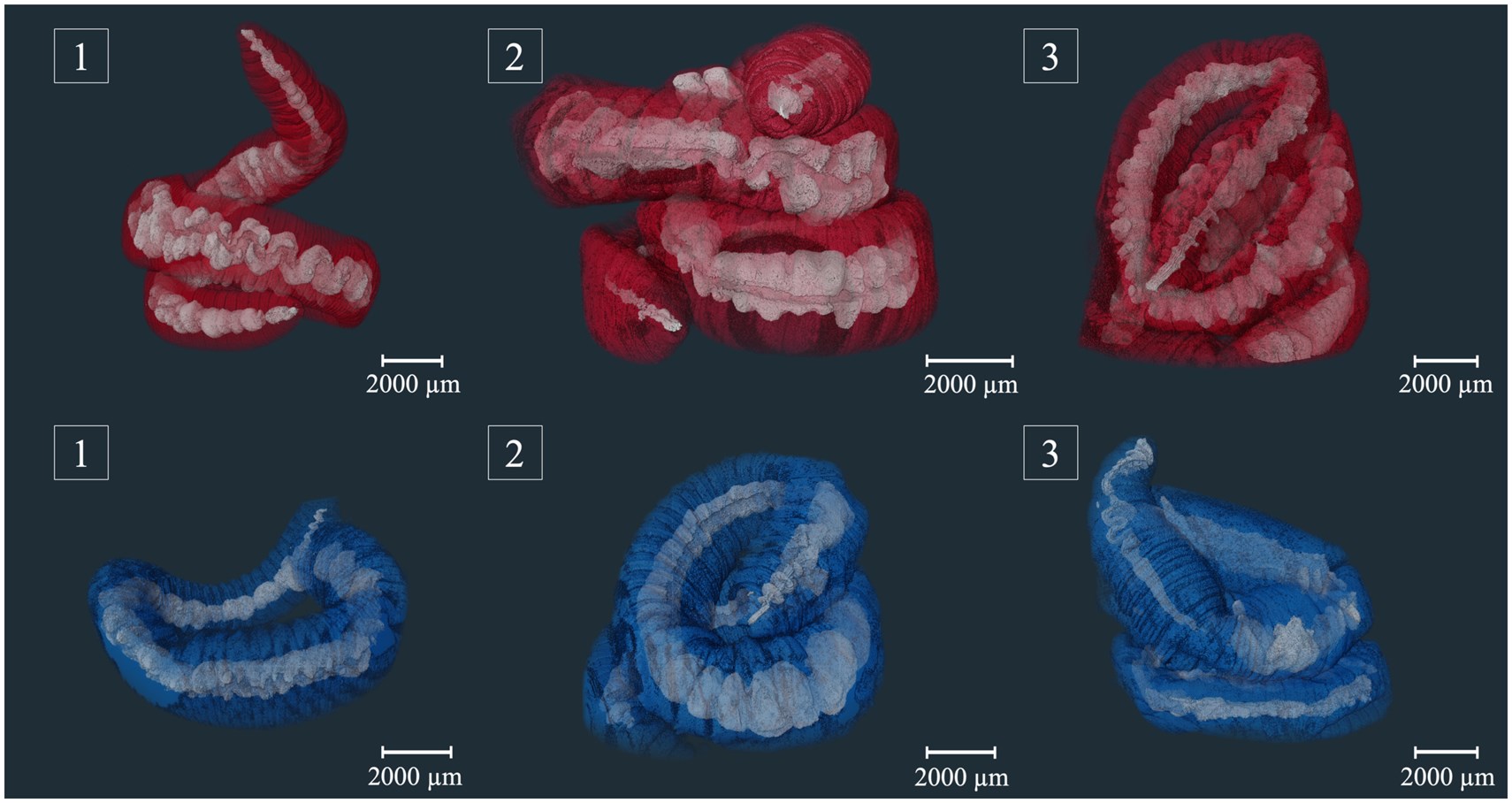
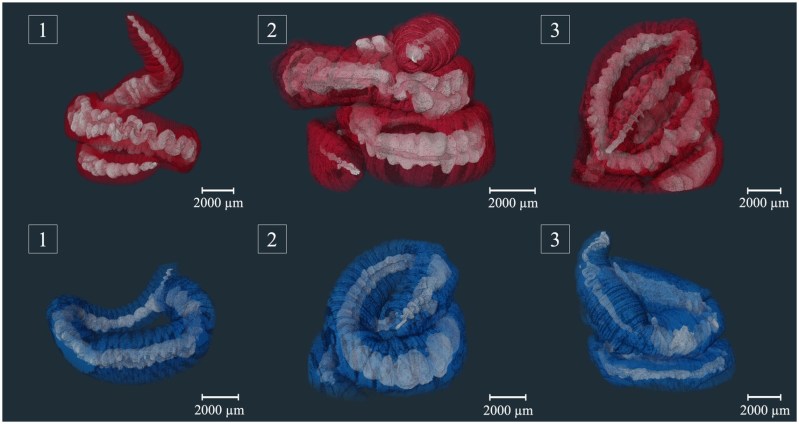
Using synchrotron X‑ray imaging, the scientists tracked the particles’ journey through the worm’s digestive tract. They expected to see particles moving into gut tissues if absorption occurred. Instead, the images clearly showed that both the polyethylene‑BaSO₄ particles and the glass microspheres passed through the worm’s gut without being taken up. Even particles as small as 5 µm—smaller than many human cells—were rejected. The worms appear to have an efficient mechanism for excluding solid foreign particles, perhaps related to the protective mucus lining of their gut.
Step 5: Interpreting the Results—What It Means
The study’s core finding is that earthworms do not bioaccumulate microplastics, at least under the conditions tested. This is good news because:
- If worms don’t absorb microplastics, their predators (birds, moles, etc.) are unlikely to get them from eating worms.
- It suggests that microplastic transfer up the terrestrial food chain may be limited, unlike the well‑known bioaccumulation of many chemical pollutants.
- It opens the possibility that other soil decomposers might also be able to exclude microplastics, further reducing ecological risk.
However, caution is warranted: the study used a single plastic type (polyethylene) and a specific size range. Other plastics (e.g., polystyrene, nylon) or much smaller nanoparticles might behave differently. Also, the presence of barium sulfate might affect particle surface properties, altering how the worm’s gut interacts with them.
Step 6: Connecting to Human Health
It’s tempting to directly apply these worm findings to human dietary exposure. But humans are not earthworms—our digestive systems and food sources are vastly different. Most human microplastic exposure comes from food and drink contaminated during processing or from packaging, not from soil. Still, the study is encouraging because it suggests that at least one important ecological pathway for microplastic entry into the food web may be blocked. In parallel, other research has highlighted that many earlier microplastic studies might have overestimated contamination because of microparticles shed from laboratory gloves—a reminder to always scrutinise methods.
Common Mistakes & Misinterpretations
When discussing this research, people often fall into a few traps:
- Equating ‘no bioaccumulation’ with ‘no harm’: Even if microplastics pass through the gut, they could still cause physical damage or leach chemical additives during transit. The study didn’t measure toxic effects, only accumulation.
- Overextrapolating to all organisms: A single species result is not a universal rule. Bivalves, for instance, are known to retain microplastics. Always check the specific species and conditions.
- Ignoring the artificial lab setting: The soil was spiked with very high levels of labelled particles. In nature, microplastics are often mixed with other contaminants, and worms may be exposed over longer periods. Lab results need field validation.
- Confusing correlation with causation: Some studies show microplastics in human tissues, but that doesn’t prove they came from worm consumption or that they cause harm. The worm study only shows one potential transfer route is low risk.
Summary
The discovery that earthworms do not bioaccumulate polyethylene microplastics offers a hopeful counterpoint to the pervasive narrative of microplastic doom. Using synchrotron X‑ray imaging, scientists directly observed that even fine 5 µm particles pass through worm guts without absorption, suggesting that the terrestrial food chain may have a built‑in filter at its base. While more research is needed—testing other plastics, longer exposures, and field conditions—the result provides a valuable piece of the puzzle. It reminds us that not every environmental contaminant necessarily moves unimpeded through ecosystems. With careful science and critical thinking, we can better understand which risks demand our urgent attention and which may be more manageable than feared.