Introduction
As quantum computing advances, the once-distant threat of breaking conventional public-key cryptography is becoming a pressing reality. Experts predict that within 10–15 years, quantum computers will render today’s encryption methods obsolete, exposing vast amounts of sensitive data to malicious actors. Even now, adversaries are employing a “store now, decrypt later” (SNDL) strategy, harvesting encrypted information in the hope of decrypting it when quantum capabilities mature. Organizations like Meta have already begun proactive migration to post-quantum cryptography (PQC), setting benchmarks for the industry. This guide distills Meta’s framework—spanning risk assessment, inventory, deployment, and guardrails—into actionable steps for any organization preparing for a PQC future. Follow these steps to navigate the transition effectively, efficiently, and economically.

What You Need
- Institutional support: Buy-in from leadership and cross-functional teams (IT, security, compliance, engineering).
- Cryptographic inventory tools: Software to map all current cryptographic assets (libraries, certificates, protocols).
- Knowledge of standards: Familiarity with NIST’s PQC standards, especially ML-KEM (Kyber), ML-DSA (Dilithium), and upcoming ones like HQC.
- Risk assessment framework: A method to classify systems by sensitivity, exposure, and urgency.
- Testing environment: Sandbox or staging infrastructure to validate PQC integrations without disrupting production.
- Hybrid migration strategy: Plan to run both classical and post-quantum algorithms during transition.
Step 1: Perform a Comprehensive Cryptographic Inventory and Risk Assessment
Before migrating, you must know exactly what cryptographic systems you have and which are most vulnerable. Begin by cataloging every instance of public-key cryptography across your organization—TLS certificates, code-signing keys, authentication tokens, VPN tunnels, and more. Use automated tools to scan repositories, network configurations, and hardware security modules. Next, classify each asset by sensitivity (e.g., user data, internal communications) and exposure to SNDL attacks. Assign a risk score based on factors like data retention requirements (e.g., long-term storage of health records increases risk) and the difficulty of replacing the cryptographic component. This inventory becomes the foundation of your migration roadmap.
Step 2: Define PQC Migration Levels for Your Organization
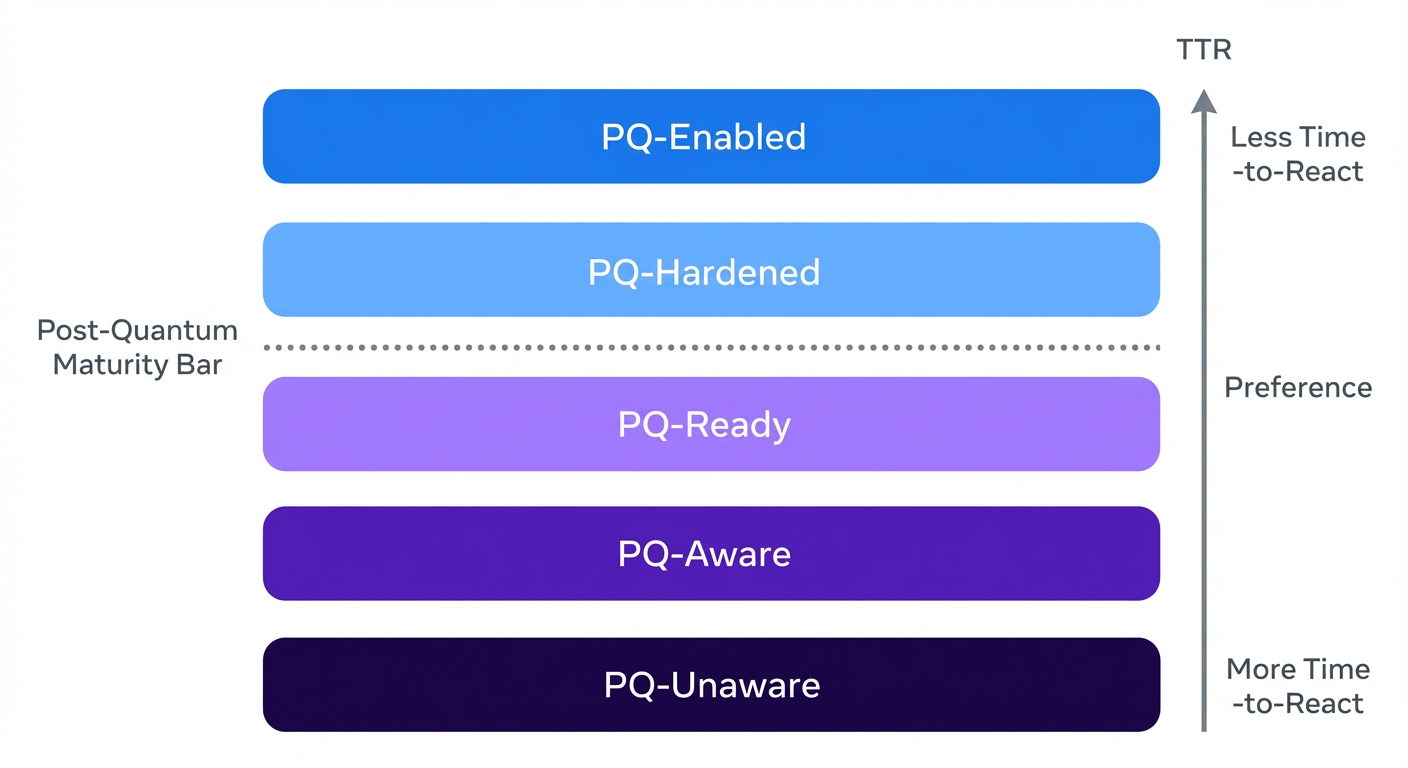
One of Meta’s key insights is the idea of “PQC Migration Levels” to manage complexity across diverse use cases. Create a tiered framework that categorizes systems by priority and migration difficulty:
- Level 0 (Baseline): Systems that can wait for widely adopted PQC standards; no immediate action required.
- Level 1 (Priority): High-risk systems exposed to SNDL (e.g., long-term storage encryption, critical authentication). Target migration by 2025–2027.
- Level 2 (Aggressive): Core infrastructure and high-volume services. Plan for hybrid deployment (classical + PQC) by 2028–2030.
- Level 3 (Full PQC): All systems eventually rely solely on NIST-standardized PQC algorithms. Target 2030+.
Align levels with the NIST and NCSC guidance that emphasizes 2030 as a key deadline for critical systems. This tiered approach prevents overwhelm and allows phased investment.
Step 3: Select Algorithms and Establish Hybrid Standards
With NIST’s final standards (ML-KEM, ML-DSA, and soon HQC) you have robust options. For key encapsulation (encryption), use ML-KEM (formerly Kyber). For digital signatures, adopt ML-DSA (Dilithium). Meta cryptographers co-authored HQC, an alternative that offers different trade-offs; stay informed about its standardization. During transition, deploy hybrid implementations that combine classical algorithms (e.g., X25519, ECDSA) with PQC counterparts. This ensures backward compatibility and defense against unforeseen weaknesses in new algorithms. Define internal policies that mandate hybrid mode for any new cryptographic deployment.
Step 4: Develop a Phased Deployment Plan
Migration cannot happen overnight. Break the work into digestible phases:
- Phase 1 (Pilot): Migrate a non-critical internal service (e.g., a developer tool) to hybrid PQC. Measure performance impact, compatibility issues, and team training needs.
- Phase 2 (Scaling): Roll out to Level 1 priority systems. Update TLS stacks, authentication protocols, and key management infrastructure. Use feature flags to allow gradual traffic shifting.
- Phase 3 (Broad Integration): Expand to Level 2 systems. Coordinate with vendor libraries and open-source toolchains that support PQC. Continuously test for regressions.
- Phase 4 (Complete Overhaul): Remove classical fallbacks where safe, transitioning to full PQC. Document all changes and prepare for long-term monitoring.
Meta’s multi-year process shows that even a large organization needs patience; each phase should include extensive automation and regression testing.
Step 5: Implement Strong Guardrails and Continuous Monitoring
After deployment, maintain cryptographic agility. Implement guardrails that prevent accidental reversion to weak algorithms. Use automated policy enforcement tools that block non-PQC-capable connections for high-sensitivity endpoints. Set up monitoring dashboards to track:
- Percentage of traffic using hybrid or full PQC (target: 100% for critical systems by 2030).
- Failure rates and performance metrics (e.g., handshake latency).
- Newly discovered vulnerabilities in deployed algorithms.
Establish a cryptographically agile team that reviews NIST updates and adapts your guardrails accordingly. Document all lessons learned and share them internally to accelerate future migrations.
Tips and Takeaways
- Start early. The SNDL threat is active now; don’t wait for quantum computers to arrive before taking inventory.
- Involve all stakeholders. Security, engineering, legal, and executive teams must align on risk appetite and deadlines.
- Build for hybrid from the start. Mix classical and PQC algorithms to future-proof without breaking current interoperability.
- Automate inventory updates. Cryptographic landscapes change constantly; maintain a living inventory that triggers re-assessment.
- Leverage community standards. Follow NIST, NCSC, and open-source implementations to avoid proprietary traps.
- Plan for algorithm evolution. PQC algorithms may have performance trade-offs or unforeseen vulnerabilities; keep a reserve list of backups.
- Don’t overcomplicate migration levels. Use a simple tiered system (like Meta’s) to prioritize without analysis paralysis.
- Test aggressively. Simulate SNDL scenarios and verify that hybrid implementations actually protect against future decryption.
By following these steps, your organization can replicate Meta’s proactive approach and ensure that your data remains secure in the post-quantum era. The journey is long, but the cost of inaction—especially with SNDL attacks already in play—is far greater.