Artificial intelligence is rapidly transforming the modern workplace, reshaping how employees across various sectors approach their daily tasks. From educators to marketers, professionals are finding innovative ways to integrate AI into their workflows to save time, spark creativity, and improve efficiency. While the technology offers significant benefits, users also emphasize the need for careful oversight to avoid pitfalls such as factual errors or diminished critical thinking. Below are some real-world examples of how AI is being harnessed in different roles.
Breaking Down Complex Terminology
# In technical fields, AI can act as a translator between specialists and non-specialists. Kristin Moore, a technical product manager at PERQ—a digital marketing platform for property management companies—uses AI to bridge understanding gaps. When engineers discuss intricate topics during meetings, Moore uploads the recorded conversation to Claude, an AI assistant by Anthropic. She then asks it to distill the discussion into actionable steps. “It picks up on all of that terminology that I don’t understand, and it can simplify it into something that I can consume,” Moore explains. Beyond meetings, she also uses the same tool to analyze emails, support tickets, and recorded interactions to identify client needs. Moore notes that this approach has “freed up hours and hours of my week.”
Revolutionizing Education
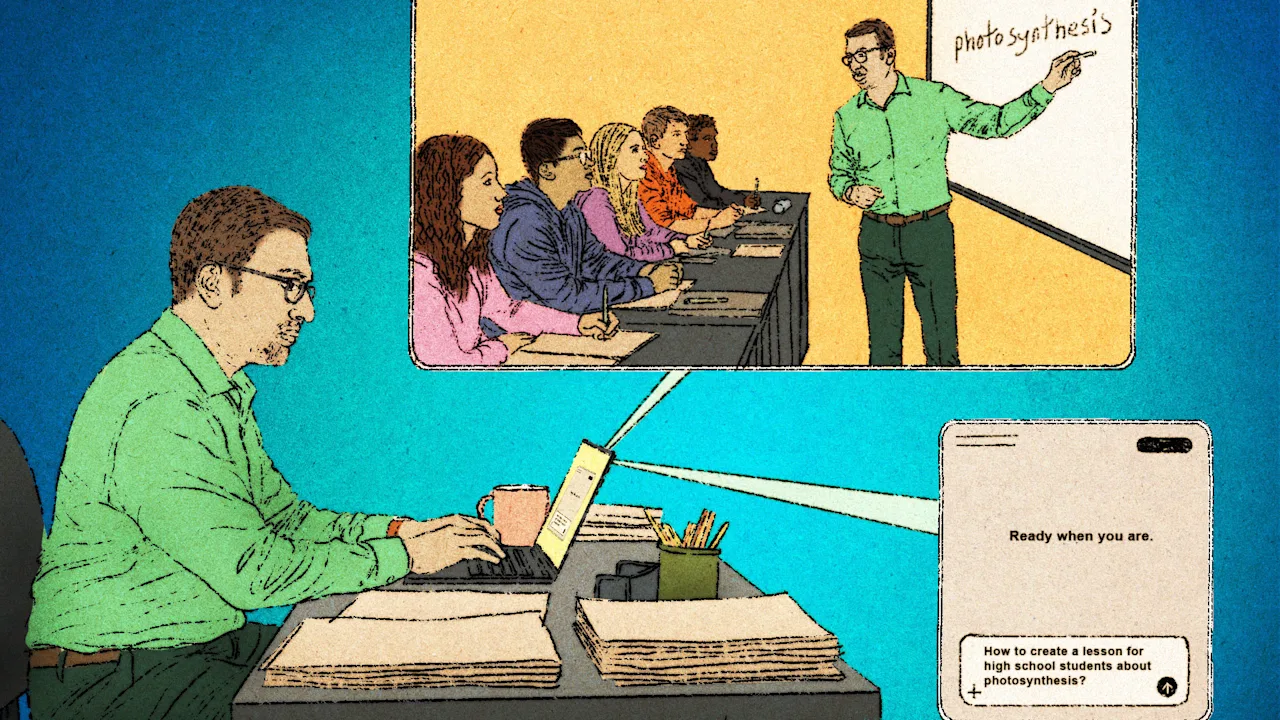
# In the classroom, AI is alleviating administrative burdens. Kyle Weimar, an elementary school teacher with Charter Schools USA and coordinator of a multi-tiered support system, leverages AI to assist students performing in the bottom 20%. He uploads test scores, report cards, and health records into his district’s AI tool, asking it to brainstorm intervention strategies before meetings. Weimar also uses AI to grade assignments: by feeding a scoring guide and 100 papers to an AI agent, he receives instant feedback for students. “I can do that in 30 minutes, whereas it would have taken me a week before,” he says. With teachers often overwhelmed, Weimar adds, “any tools that we can use to make that a little bit more viable, we’re really excited about using.”
Enhancing Marketing Insights
# Marketing professionals are using AI to better understand their audience. Ashley Smith, head of marketing at HireQuest—a staffing and recruiting company with about 400 franchises—used Claude to build a dashboard that monitors website traffic data and social media trends. The tool reports which content resonates with followers and what is ignored. Smith then shares these insights with franchisees, helping them refine their strategies to win more business. This application demonstrates how AI can transform raw data into actionable intelligence, saving hours of manual analysis.
Navigating Potential Pitfalls
# Despite these benefits, some users caution against over-reliance. Concerns include the erosion of critical thinking skills, especially among younger learners, and the risk of AI “hallucinations” or outright mistakes. It’s essential to verify AI-generated outputs and maintain a human-in-the-loop approach. As AI continues to evolve, striking the right balance between automation and human judgment will be key to maximizing its value while minimizing risks.