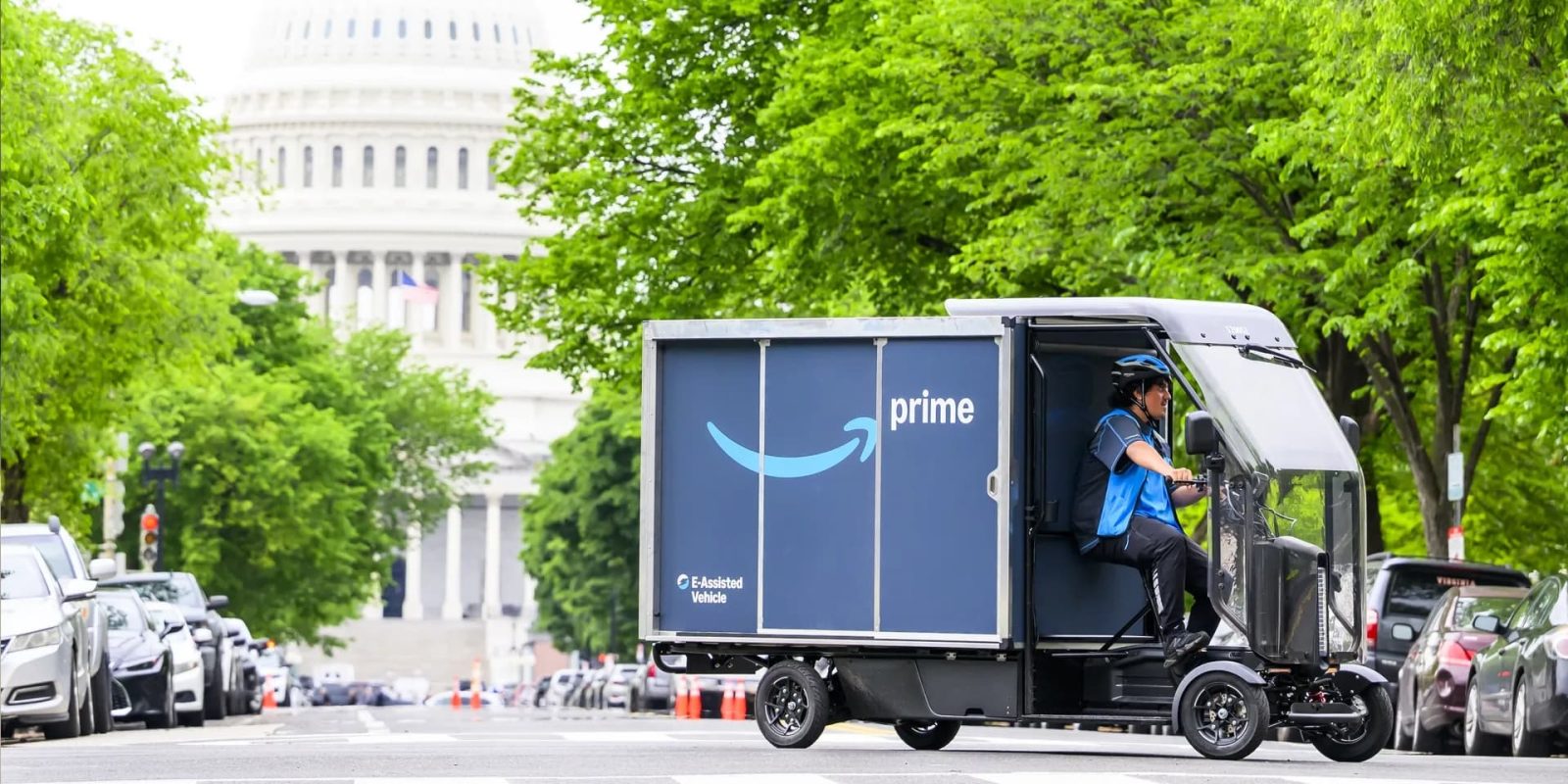
Amazon is taking a big step toward greener urban logistics by launching a pilot program in Washington, D.C. called “MicroFreight DC.” In partnership with the District Department of Transportation (DDOT), the e-commerce giant is replacing traditional delivery vans with battery-powered cargo bikes for last-mile deliveries. This ten-month trial aims to reduce traffic congestion, cut emissions, and make neighborhood deliveries more efficient. Let’s dive into the key details with some frequently asked questions.
What exactly is the MicroFreight DC pilot program?
MicroFreight DC is a ten-month initiative launched by Amazon in collaboration with the District Department of Transportation (DDOT). Under this program, Amazon’s Delivery Service Partners will use a fleet of electric cargo bikes to deliver packages to homes and businesses in Washington, D.C., instead of relying on conventional delivery vans. The goal is to test whether e-cargo bikes can provide a faster, cleaner, and more flexible alternative for urban deliveries. By shifting to these battery-powered bikes, Amazon hopes to reduce traffic congestion, lower carbon emissions, and improve air quality in dense neighborhoods. The pilot also includes dedicated bike lanes and secure parking hubs to streamline operations. If successful, this model could be expanded to other cities facing similar logistical challenges.
Why did Amazon choose Washington, D.C., for this e-bike delivery experiment?
Washington, D.C., was selected because of its unique combination of dense urban streets, heavy traffic, and strong support for sustainable transportation initiatives. The District Department of Transportation (DDOT) has been actively promoting bike-friendly infrastructure, including protected bike lanes and cargo bike parking zones. This makes D.C. an ideal testing ground for Amazon’s electric cargo bike fleet. Additionally, the city’s population density means many deliveries can be made within a short radius, allowing e-bikes to outperform vans in both speed and efficiency. By partnering with a local government agency, Amazon also gains access to data on traffic patterns, delivery times, and environmental impact. This collaboration helps refine the concept before potentially rolling it out to other metropolitan areas experiencing similar congestion and pollution problems.
How do e-cargo bikes compare to traditional delivery vans in terms of efficiency and cost?
E-cargo bikes offer several advantages over vans for last-mile deliveries in cities. They are more maneuverable, allowing drivers to use bike lanes, pedestrian zones, and narrow streets that vans cannot access. This reduces time spent in traffic and eliminates the need to search for parking, which often leads to fines and wasted fuel. From a cost perspective, e-bikes require significantly less maintenance, no gasoline, and lower insurance premiums. Amazon estimates that a cargo bike can deliver up to 80% of packages that a van would handle in the same area, but with 90% fewer emissions. However, e-bikes have limited cargo capacity (typically 400–600 pounds) and shorter range (about 25–40 miles per charge), so they work best for heavily populated neighborhoods with many stops close together. Overall, the total cost per package can be lower for e-bikes when factoring in operational savings, especially in dense urban cores.
What types of packages will the e-cargo bikes deliver?
The e-cargo bikes are designed to handle standard Amazon packages, including small to medium-sized items such as books, electronics, clothing, household goods, and groceries. The bikes can carry up to 400–600 pounds in their enclosed cargo compartments, which are weatherproof and secure. Larger or heavier items, like furniture or bulk orders, will still require traditional delivery vans. The pilot program focuses on residential deliveries within a few miles of a central hub where bikes are loaded and parked. By concentrating on smaller packages, Amazon can maximize the efficiency of the e-bike fleet while reducing the number of vans needed on the road. This also allows for quicker delivery times, as riders can navigate directly to multiple addresses without long detours.
What are the environmental benefits of switching to electric cargo bikes?
The shift to e-cargo bikes produces a substantial reduction in carbon emissions compared to delivery vans. Since the bikes are fully battery-powered, they emit zero tailpipe pollutants, contributing to better air quality in urban areas. Amazon estimates that each e-bike trip replaces one van trip, cutting greenhouse gas emissions by up to 90% per package. Additionally, e-bikes consume far less energy per mile and require no fossil fuels. The program also reduces noise pollution, as electric motors are much quieter than internal combustion engines. Beyond direct emissions, fewer vans on the road mean less traffic congestion, which in turn lowers idling-related emissions from other vehicles. The MicroFreight DC pilot aligns with Amazon’s broader Climate Pledge to achieve net-zero carbon by 2040 by promoting sustainable last-mile delivery options.

How will the e-cargo bikes affect traffic and parking in D.C.?
E-cargo bikes are expected to alleviate traffic congestion and reduce parking challenges in Washington, D.C. Delivery vans often double-park, block bike lanes, or circle blocks looking for spots, causing delays and hazards. In contrast, e-bikes can pull into designated bike parking areas or smaller spaces, minimizing disruption. The program includes partnerships with DDOT to create secure parking hubs where bikes can be loaded and unloaded without obstructing traffic. Early projections suggest that replacing 20–30 vans with e-bikes in a single neighborhood could reduce vehicle miles traveled by up to 50% during peak hours. This not only speeds up deliveries but also improves safety for pedestrians and cyclists. While the impact on overall city traffic may be modest at first, scaling up the program could significantly reduce the number of delivery vehicles clogging city streets.
What challenges does Amazon face with e-cargo bike deliveries in cities?
Despite their benefits, e-cargo bikes come with several logistical hurdles. Limited cargo capacity means that riders cannot carry large volumes of packages, requiring multiple trips or a larger fleet. Range anxiety is another issue: battery life can be affected by weather, terrain, and load weight, so routes must be carefully planned. Infrastructure is also a concern—cities need protected bike lanes and secure parking areas to accommodate cargo bikes safely. In D.C., DDOT’s support helps, but other cities may lack similar infrastructure. Additionally, e-bike riders require proper training to handle heavy loads and navigate traffic, and Amazon must ensure that delivery partners are equipped with spare batteries and maintenance facilities. Weather conditions like rain, snow, or extreme heat can further impact efficiency. Finally, public acceptance and compliance with local regulations are ongoing challenges that Amazon must navigate as the program expands.
Will Amazon expand this e-cargo bike delivery model to other cities?
Yes, Amazon is actively exploring expansion opportunities. The MicroFreight DC pilot serves as a proof of concept, providing data on cost, efficiency, and environmental impact. If the ten-month trial proves successful, Amazon plans to replicate the model in other major U.S. cities facing similar urban delivery challenges. Potential candidates include dense, bike-friendly metros like New York, San Francisco, Boston, and Seattle. Amazon has already tested e-cargo bikes in Europe and is now adapting the concept for American cities. The company is also investing in custom e-bike designs and charging infrastructure to support large-scale deployment. Long-term, Amazon aims to have 10,000 e-cargo bikes worldwide, replacing thousands of vans. However, scaling up will depend on government partnerships, regulatory support, and continued investment in bike-friendly infrastructure. If all goes well, you might soon see more electric cargo bikes delivering packages on your street.