Introduction
NASA's Mars Science Laboratory mission continues to push the boundaries of planetary exploration. In a recent series of operations spanning Sols 4893 to 4899 (Earth dates May 12–18, 2026), the Curiosity rover successfully drilled into a new rock target named Campo Marte, while also capturing a unique opportunity to observe the Psyche spacecraft as it performed a gravity-assist flyby of Mars. This article details the drilling campaign, the scientific measurements taken, and the significance of the Psyche encounter.
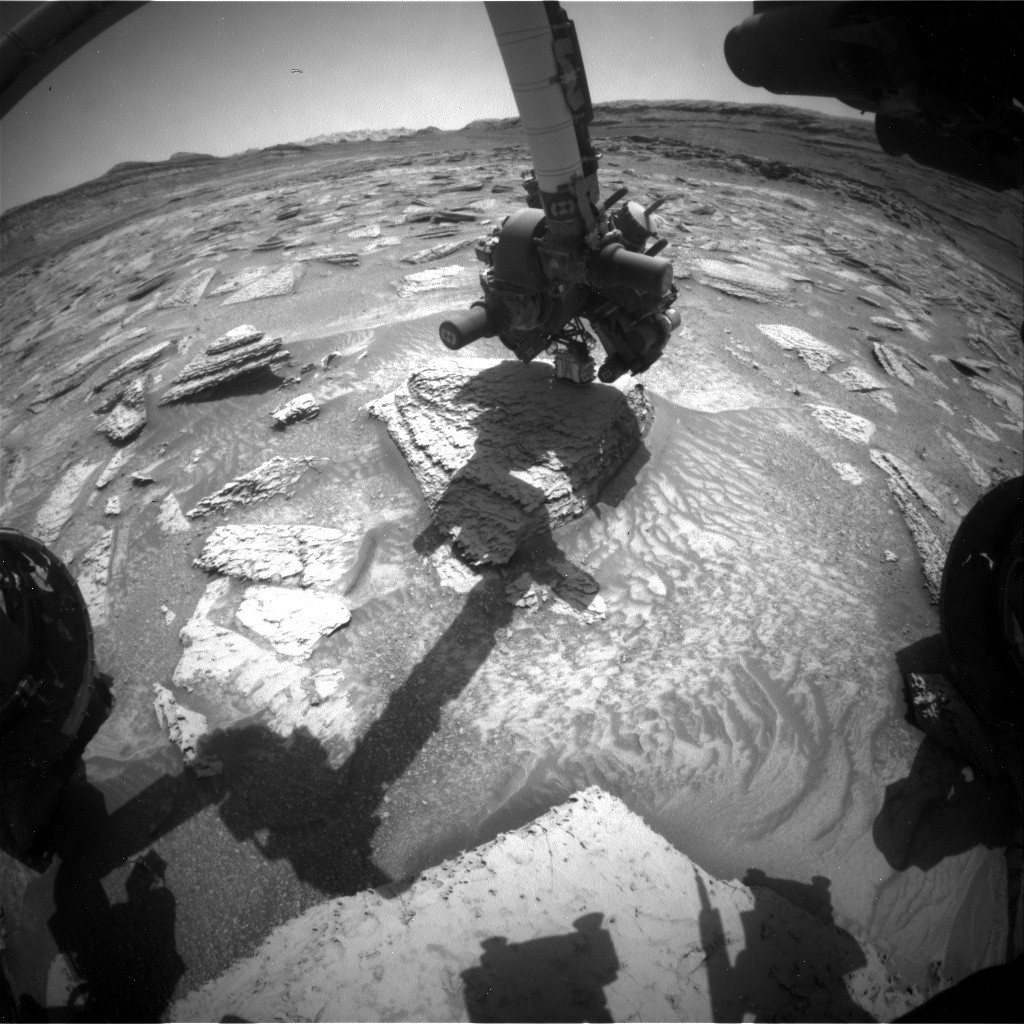
Drilling at Campo Marte
After an unexpected incident with the previous drill target, Atacama—during which the rover's arm briefly became entangled—the team moved to a new location. The selected block, Campo Marte, lies in the same geological stratum: the layered sulfate unit above the prominent boxwork structures. The name, drawn from a natural red sandstone feature in Bolivia, translates to "Field of Mars" in Spanish—a fitting moniker for a target on the Red Planet.
Preparation and Measurements
Before drilling, Curiosity conducted a thorough characterization of Campo Marte using its onboard instruments. The Chemistry and Camera (ChemCam) performed laser-induced breakdown spectroscopy (LIBS) to analyze elemental composition, while the Alpha Particle X‑ray Spectrometer (APXS) provided complementary data. High-resolution imaging with the Mars Hand Lens Imager (MAHLI) captured detailed textural features. Additional LIBS rasters were taken on nearby rocks, including vein-like and nodule-like structures, to compare geochemical signatures across the area. Notably, several blocks—such as Paso Malo—display a striking polygonal surface pattern, similar to features seen at earlier stops in this sulfate unit.
Lessons from Atacama
The Campo Marte block is substantially thicker than the Atacama block, giving the team confidence that it will remain stable during drilling. The earlier incident with Atacama provided valuable—if unplanned—data on rock volume and density, but engineers are eager to avoid a repeat. This time, careful imaging from multiple angles confirmed the block's robustness, ensuring that the drill bit can be withdrawn normally after the operation.
A Visit From the Psyche Spacecraft
Midway through the drilling campaign, Curiosity had a rare opportunity to support another NASA mission. The Psyche spacecraft, en route to the main asteroid belt, executed a gravity-assist flyby of Mars on Sol 4897 (May 16, 2026). This maneuver used Mars's gravitational field to alter the spacecraft's trajectory and increase its velocity, saving propellant and travel time.
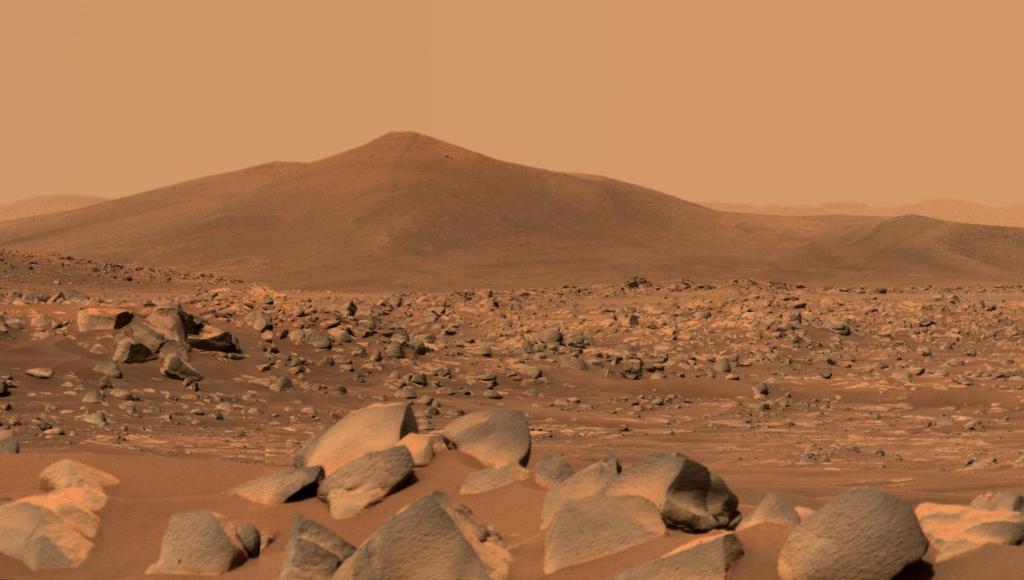
Psyche's ultimate destination is the metallic asteroid 16 Psyche, a unique world that may be the exposed core of an early planetesimal. Although 16 Psyche differs greatly from Mars in composition and scientific goals—it is thought to be rich in iron and nickel, unlike the Red Planet's silicate crust—the flyby allowed for cross-mission collaboration. Curiosity's cameras and spectrometers could have captured the spacecraft as a fast‑moving point of light, helping to validate tracking and calibration. The encounter also served as a reminder of the interconnectedness of solar system exploration.
Scientific Context and Future Steps
The drilling at Campo Marte continues the mission's systematic investigation of the layered sulfate unit, which records ancient environmental conditions on Mars. The polygonal textures seen on nearby rocks hint at cycles of wetting and drying or thermal contraction—processes that may have created a habitable micro-environment billions of years ago. Data from this campaign will be compared with results from previous drill sites to build a comprehensive picture of the region's geologic history.
Meanwhile, the Psyche flyby adds a unique chapter to the mission. As the spacecraft heads toward its 2029 arrival at the asteroid, the data collected during the Mars gravity assist will refine models of the inner solar system's gravitational field and improve navigation for future deep‑space missions.
Conclusion
In just one week, Curiosity accomplished two major feats: extracting a pristine sample from a promising rock target and lending support to a sister mission. The ongoing exploration of Gale Crater continues to yield unexpected insights, while collaborations like the Psyche flyby demonstrate how multiple missions can work together to unlock the secrets of our solar system. Stay tuned as Curiosity presses onward, drilling deeper into Mars's ancient past.